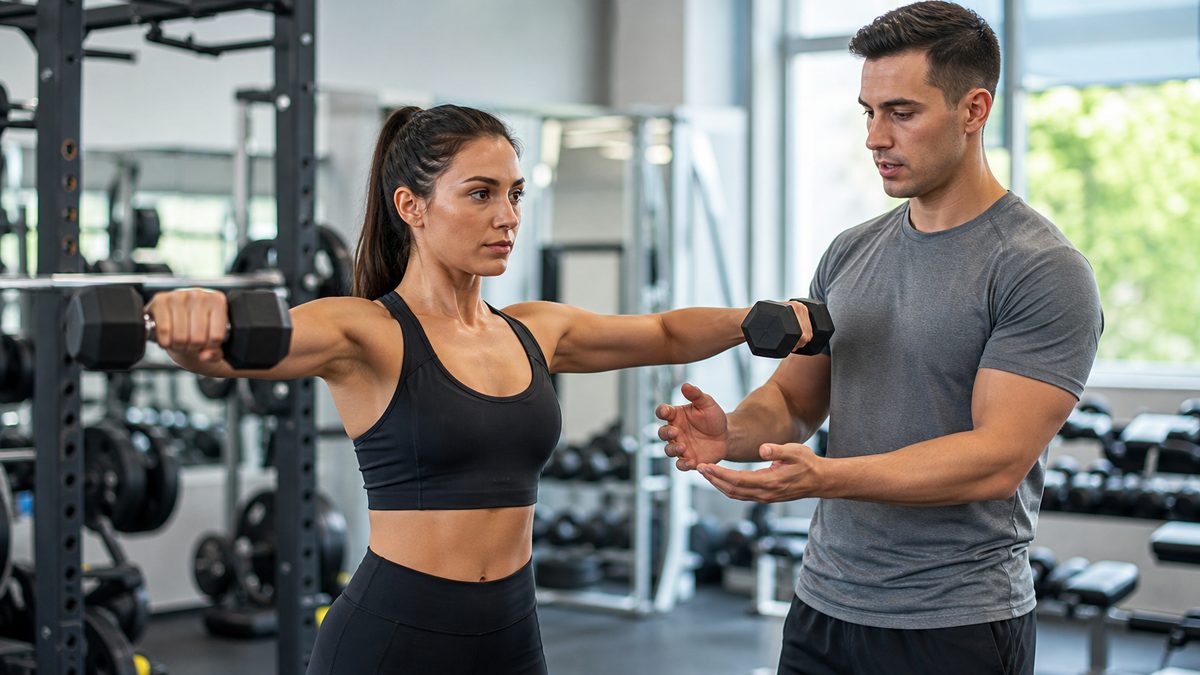
Most people feel clear progress within two to four weeks and see visible body changes within eight to twelve weeks. Your first wins may be better form, more energy, extra strength, or less fear around Exercise. Changes in Weight, Body composition, and muscle size take longer because your body needs many repeat sessions to adapt.
A personal trainer can speed things up by matching the program to your ability, fixing weak technique, and changing the plan when progress stalls. But a trainer can't replace sleep, food, recovery, or the work you do between sessions. Your results come from the whole week, not one hour at the gym.
What changes should you notice first?
The first gains often show up in how you move and feel. During the first two weeks, exercises start to feel less clumsy. You learn where to put your feet, how to brace your trunk, and how to control each repetition.
These changes may not show in the mirror. They're still real training results.
Your nervous system learns to use your Skeletal muscle more effectively. This can make you stronger before the muscle itself grows much bigger. A squat that felt shaky in week one may feel smooth by week three. You may lift more weight simply because your timing and technique are better.
Daily tasks often become easier at this stage. Stairs feel less taxing. Shopping bags seem lighter.
Lower back stiffness may ease after sitting, provided the program suits the person and there is no untreated injury. These signs show that Physical fitness is changing, even if the scales haven't moved.
A common client reaction after the first few sessions is, “I do not look different yet, but I feel much more capable.” That's the usual order. Skill and confidence tend to arrive before a visible change in shape.
When will strength start to improve?
Most beginners can measure strength gains within two to four weeks. You might complete extra repetitions, show better control, lift a heavier load, or finish the same session with less effort.
Early strength gains mostly come from learning. Your brain gets better at recruiting muscle fibres for the task. After several weeks, the muscles and supporting tissues also start to adapt to the repeated load.
A trainer should record the exercises, loads, repetitions, range of motion, and effort level. Without records, small gains are easy to miss. Adding two repetitions to a set or picking up a heavier dumbbell proves the program is working, even when the change feels modest.
Progressive overload drives this process. It means raising the demand as your body adapts. More load is one choice, but it isn't the only one.
A trainer may add repetitions, improve your range, slow the lowering phase, or choose a harder version of an Exercise. The increase should give your body a reason to adapt without ruining your form.
Rapid gains won't continue at the same pace. Beginners often improve quickly because nearly every training skill is new. Someone with years of lifting experience may need several weeks to add a small amount to a major lift. At that level, slower progress doesn't mean the coaching has failed.
When do visible changes usually appear?
Visible changes commonly begin between weeks six and twelve. Some people feel their clothing fit differently before photos show a clear change. Others get stronger while looking much the same for several weeks.
The mirror is a poor daily measuring tool. Lighting, posture, water retention, and the amount of food in your digestive system can all change your appearance. Daily checks can hide the real trend because normal shifts look bigger than the slow changes caused by training.
Take photos under the same conditions every four weeks. Add waist or hip measurements if they fit your goal. Check your gym performance too. Together, these measures tell you more than Weight alone.
Body composition describes how much of your body is fat mass compared with lean tissue and other tissue. It can improve while scale Weight barely changes. A new lifter may lose some fat while building muscle, especially during the first months. The body feels firmer and measurements fall, yet the scale hardly moves.
How soon can training improve fitness and stamina?
Cardiovascular fitness can start improving within two to six weeks when training is regular. You may recover faster after a hard set, walk more quickly without gasping, or get more work done in the same time.
Cardio training asks the heart, lungs, and Circulatory system to deliver oxygen more effectively. In response, the body gets better at moving and using oxygen. A beginner can often feel this shift before any big physical change becomes visible.
The right test should match the goal. A runner might track a set distance and heart rate. Someone training for daily health might repeat a brisk walk, bike interval, or step test under similar conditions. The trainer can then adjust the workload using real evidence instead of guesswork.
More effort isn't always better. Hard intervals every day can cause fatigue and lower the quality of strength sessions. A useful plan puts hard work where you can recover from it, then uses easier movement to build capacity without draining you.
How long does Weight loss usually take?
Safe, visible Weight loss often takes eight to twelve weeks, though the scale may move sooner. Training helps preserve muscle, raises energy use, and adds structure to your week. Food intake still has the biggest direct effect on whether body Weight falls.
A practical rate for many people is about 0.25 to 0.75 kilograms per week. People with more Weight to lose may see a quicker early change. Smaller people, or those already near their goal, often move more slowly.
The first week can fool you. A sudden drop may come from changes in stored carbohydrate, water, salt intake, or food volume. A sudden rise can follow a hard session because sore tissue holds extra fluid during recovery. Neither result proves that body fat changed at the same speed.
For Weight loss, compare a weekly average instead of single weigh-ins. Track waist size, training performance, and how your clothes fit as well. If the average hasn't moved for several weeks and waist size is unchanged, it's time to review the food plan or activity level.
personal training works best here when it backs up clear habits. One hard workout doesn't wipe out frequent overeating. In my experience of how training plans work in real life, the person with a realistic food routine who walks often will usually beat someone who trains hard but treats each session as permission to eat more.
When does muscle growth become noticeable?
Muscle hypertrophy usually becomes noticeable after eight to twelve weeks of focused strength training. Clear changes often take three to six months. Experienced lifters may wait longer because their body has already adapted to years of training.
Muscle growth needs enough training tension, suitable food, and recovery. Protein supplies the material for repair. Your total food intake affects whether the body has enough energy to build tissue. Sleep helps that repair process and lets you train with more force at the next session.
A muscle-gain program should train the target muscles through useful ranges of motion and include enough hard sets across the week. Sets should feel tough near the end while technique stays controlled. Random workouts make progress hard to measure because the demand changes before your body has time to adapt.
Soreness doesn't measure growth. A new movement can leave you very sore without producing a better long-term result. Once your body adapts, an effective workout may cause little soreness. Track load, repetitions, measurements, and photos instead.
One mistake is cutting food too hard while expecting rapid muscle gain. A large calorie deficit may fit an urgent fat-loss phase, but it makes Muscle hypertrophy harder. Your goal should decide how you set up training and food.
Why do some people see results faster?
Your starting point changes the timeline. A complete beginner often gains strength and fitness quickly because the body has plenty of room to improve. Someone returning after a break may also regain old capacity faster than they built it the first time.
Training history matters. So do age, health, stress, sleep, nutrition, and medication. These factors don't take away your chance to improve. They change how much work and recovery you can handle.
Adherence has the biggest effect that most people can control. Completing most planned sessions for twelve weeks beats following a perfect plan for ten days. The same is true for food and sleep habits.
Effort counts too. A set that ends far below a safe, challenging point may maintain skill without creating enough demand for change. A trainer helps you learn what useful effort feels like. That's especially helpful for beginners who stop too soon or push every set until their technique falls apart.
Results may also come faster when the goal is narrow. Improving a squat pattern is easier to measure than trying to lose fat, gain muscle, run faster, fix sleep, and change every food habit at once. One clear main goal lets the program send a strong signal.
How can you tell whether the plan is working?
Judge the plan by trends across four-week blocks. Each goal needs a measure that can pick up change.
- For strength, record load, repetitions, technique, and range of motion.
- For Weight loss, compare weekly scale averages and regular waist measurements.
- For Muscle hypertrophy, use measurements, progress photos, and performance in repeat exercises.
- For Cardiovascular fitness, repeat the same timed task and record pace, distance, heart rate, or recovery time.
- For general Physical fitness, note how easily you handle work, stairs, sport, and daily movement.
A good trainer should explain what's being measured and why. The numbers should tie back to your goal. Sweat, exhaustion, and calorie estimates from watches may add context, but they don't prove your body is moving toward the result you want.
Review the program if no useful measure has improved after four to six weeks. First, check whether you completed the sessions as planned. Then look at effort, recovery, food intake, and the exercise dose.
Changing the whole program every week makes the cause hard to spot. Adjust one major factor, keep everything else steady, and measure again.
What can delay progress even with a good trainer?
Missed sessions are the clearest cause. Your body adapts to repeated demand, so scattered workouts bring scattered results. Extra work after a missed week doesn't fully replace steady training.
Poor recovery can hide progress too. Too little sleep may lower training effort and increase hunger. High life stress can make a suitable program feel far harder. Adding more sessions in that state may deepen fatigue instead of building fitness.
Pain that changes how you move needs attention. Training through sharp or worsening pain can lower the quality of Exercise and may drag out the problem. A trainer can change the session and refer you to a suitable health professional when the issue sits outside their training scope.
Constant program changes cause another delay. Variety can keep training fun, but the main movements need enough repetition for skill and Progressive overload. If each workout uses different exercises, there's no fair way to tell whether your Skeletal muscle is adapting.
Unrealistic targets can make normal progress feel like failure. Losing a large amount of fat or building a clearly muscular frame takes longer than improving early strength. Base your expectations on the size of the goal, not a short social media transformation.
What should a realistic twelve-week result look like?
After twelve steady weeks, a beginner should have clear proof of progress. Technique should feel more stable. Strength should rise across several exercises. Workouts should feel familiar, and recovery between efforts should be better.
Visible results depend on the goal and starting point. Someone focused on fat loss may have a smaller waist and lower average Weight. Someone focused on muscle may look firmer and lift far more, even if the scale rises. A person training for health may notice better Cardiovascular fitness and more energy without a dramatic visual shift.
The best twelve-week result isn't a finished body. It's a set of measured gains and a routine you can keep doing. Results built on extreme food rules or punishing daily sessions often vanish when that short phase ends.
How can you make your first weeks count?
- Choose one main result for the next twelve weeks.
- Record a starting measure that matches that result.
- Complete the planned Exercise sessions and agreed work between appointments.
- Track sleep, food, steps, or recovery habits that directly affect the goal.
- Review the records with your trainer every four weeks and adjust the plan from the evidence.
Actionable takeaway: commit to one measured goal for twelve weeks, then judge your progress from four-week trends rather than daily changes.