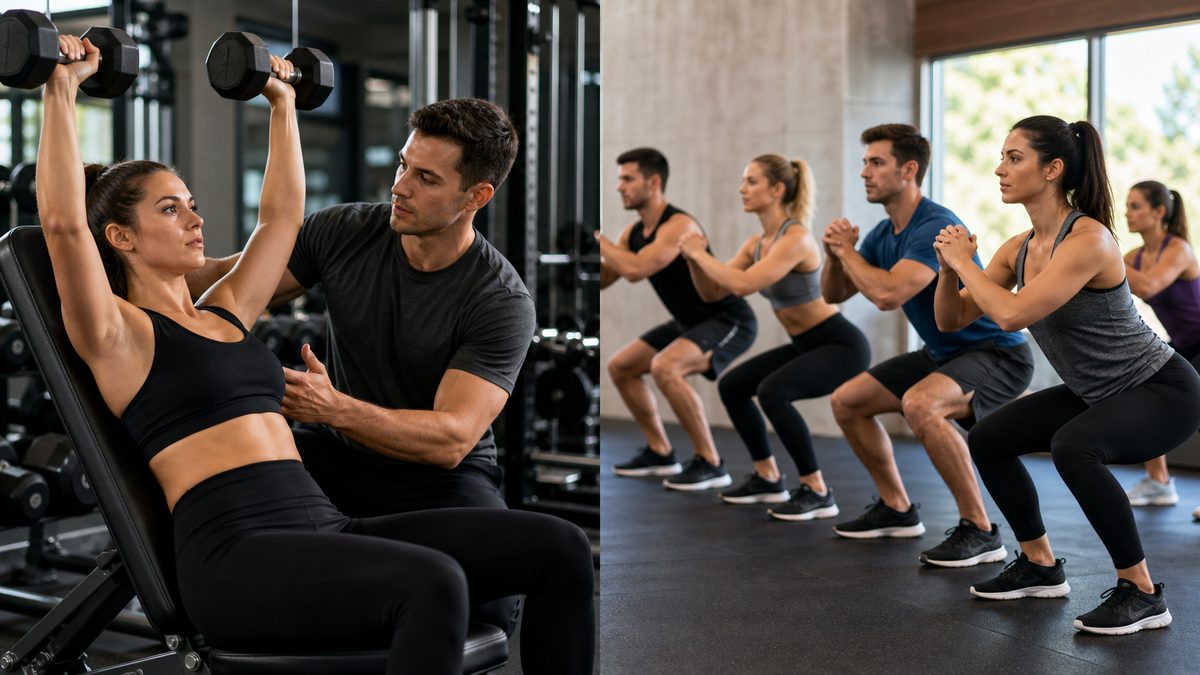
Choose personal training for one-to-one support and faster skill growth; choose group classes for cheaper workouts with social energy. Your best fit depends on how much help you need, whether your goal calls for a custom plan, and what you can keep doing each week. Many people do well by starting with a Personal trainer, then moving into classes once they feel sure of themselves.
The cheapest session isn't always the best deal. A class you attend four times each month may help more than a personal training plan you can rarely afford. But cheap classes may waste money if you feel lost, use poor form, or do workouts that don't suit your needs.
The right choice gives you enough support to make steady progress without stretching your budget.
How much individual support do you need?
personal training gives you direct attention. The trainer watches how you move, adjusts each Exercise, and changes the session if something feels wrong. This can help when you're new to training, coming back after a long break, or unsure how hard to work. This direct attention is especially valuable when starting with personal training.
A good Personal trainer also spots small issues that are easy to miss. Your knees might turn inward during a squat. You may rush the lowering part of a lift or hold your breath when working hard.
Fixing these habits early can make training feel safer and work better.
Group classes give you less one-to-one help because one coach has to watch several people. A skilled instructor can still offer useful tips, but can't study every repetition. This works well if you already know the main movements and can judge your own effort.
A common client pattern is joining a fast class before learning the basics. They copy the person next to them, pick a weight that's too heavy, and finish tired without knowing if their form was good. Four private sessions spent learning key movements can change the whole experience.
That same person may then walk into a class with more control and confidence.
Which option matches a specific goal?
Personal training has the edge when your goal needs a precise plan. Examples include learning barbell lifts, preparing for a physical test, rebuilding strength after medical clearance, or working around a movement limit. The trainer can choose exercises that match your current ability and track the numbers that matter.
Group classes suit broad goals such as improving general Physical fitness, building a regular Exercise habit, or simply moving more. You get a planned session without having to design the workout yourself. Show up, follow the coach, and do the work.
For Weight loss, either choice can work. The better one is the option that helps you train often while backing up sound food habits. A hard workout can't make up for a large and steady energy surplus.
Personal training may help if you need close accountability. Classes may work better when enjoyment and regular attendance are your main hurdles.
Don't judge a program by how wiped out it leaves you. Soreness, sweat, and a high heart rate don't prove the session supports your goal. Good training gives each exercise a clear purpose and leaves your body enough time to recover and improve.
Where does progressive overload fit?
Progressive overload means asking your body to do a little more over time. You might lift more weight, complete another repetition, improve your control, or try a harder version of a movement. This process drives much of the progress people seek from strength training.
Personal training makes progressive overload easier to plan. Your trainer can record your sets, check your technique, and decide when an increase makes sense. The next step can be small enough to challenge you without ruining your form.
Some group programs track progress well too. Look for classes that repeat key movements, offer clear levels, and record performance. Be wary when every session brings a fresh mix of exercises.
Constant variety can feel exciting, but it may hide whether you're getting stronger.
Picture doing a different squat variation each week. You may never repeat one for long enough to improve it. A sound program, by contrast, might keep a basic squat pattern for several weeks and adjust the load as your skill grows.
That simple setup often gets better results than random hard work.
What are you really buying with each option?
The Cost of personal training covers the trainer's time, planning, observation, and changes made for you. A session may also include progress checks or support between visits. Those extras have value when you use them.
In a group class, the coaching cost is shared across the room. Your fee is lower, but the program must work for a wider mix of people. You're mainly paying for coached sessions, equipment, and the group's energy.
Compare weekly value, not just the price of one session. Ask how often you can attend and how useful each visit will be. One focused private session plus two simple workouts on your own may cost less than several premium classes.
An unlimited class membership can be great value when you attend often, yet poor value when you go twice in a busy month.
Check what commitment sits behind the advertised rate. A low weekly price may lock you into a long contract. Personal training packages may expire before you use every session.
Cancellation rules matter too, especially if your work hours change with little warning.
Which format is easier to fit into your week?
Your Schedule can settle the choice before training quality even comes into it. Personal sessions often use booked appointment times. That creates commitment, but gives you less freedom when your week changes often.
Group classes run at set times. A gym might offer several sessions each day, or just one class that suits your level. Check the real timetable before signing up.
A membership isn't worth much if the useful classes clash with work, school pickup, or sleep.
Count travel and preparation time as well. A 45-minute class can take 90 minutes once you add transport, parking, and changing. A trainer near home may cost more per visit but make regular attendance easier.
The reverse may be true when a gym class is close to your workplace.
Test the schedule against a rough week, not a perfect one. If the plan only works when every day runs smoothly, it'll break often. Pick times you can protect even when work gets busy or the weather turns bad.
Which setting will keep you motivated?
Motivation is personal. Some people work harder when a coach focuses on them. They like having a booked appointment because cancelling feels harder than skipping an open gym visit.
Personal training also gives quick feedback, which can make progress easier to spot.
Other people get a lift from training beside familiar faces. A group class can build a sense of belonging and make effort feel less lonely. Music, shared work, and a friendly coach may turn exercise into something you look forward to.
Competition can help, but it can also steer you toward poor choices. Trying to match a fitter class member may make you rush or lift past your current level. A useful class lets you scale the workout without shame.
The instructor should praise good movement and steady effort, not treat the fastest result as the only win.
In practice, the strongest kind of Motivation often comes from seeing proof that your work is paying off. Track attendance and one result linked to your goal. That might be the weight used for a lift, the time needed for a set route, or how easily you climb stairs.
Visible progress lasts longer than the buzz of a new membership.
When is personal training worth the higher price?
Personal training is often worth the cost when mistakes would hold you back or make you avoid exercise. It suits beginners who want to learn, people with firm performance targets, and anyone who needs close accountability. It may also save time because each session follows your needs instead of a general class plan. Consulting with professional trainers helps ensure mistakes don't derail your results.
The higher price offers less value if you can already train safely, follow a suitable program, and stay consistent without private support. In that case, occasional coaching may be enough. You could book a technique check every few weeks while doing most sessions alone or in a class.
Judge the trainer by the quality of the plan, not by how much attention they seem to give you. Constant talking isn't the same as useful coaching. You should know what you're doing, why it fits your goal, and how your progress will be measured.
When does a group class offer better value?
A group class offers better value when it makes regular training both affordable and fun. It suits people who can scale basic movements, enjoy shared energy, and have goals that match the class style.
Match the class to the result you want. A strength class should allow enough time to set up each lift and use controlled technique. A conditioning class should offer easier options without making them feel like a penalty.
Class size matters because coaching quality often drops when one instructor has too many people to manage.
Try a class and watch how the instructor works with different ability levels. Good signs include clear demonstrations, helpful corrections, and planned rest. Warning signs include pressure to ignore pain, random exercises with no clear aim, or a pace that leaves new members lost.
Could a mix of both give you more value?
A mixed plan often gives you the support of personal training with the lower weekly cost of classes. You could use private sessions to learn technique and set a program, then join classes for extra practice and social contact.
Another choice is semi-private training. A coach works with a small group, while each person may follow a tailored plan. It usually costs less than one-to-one work and gives you more personal help than a large class.
The mix still needs a clear structure. If your private plan calls for steady strength work while your classes add several hard conditioning sessions, tiredness may rise faster than fitness. Tell each coach what else you do during the week.
Space demanding sessions far enough apart so you can recover.
How can you make the decision without wasting money?
Start by writing down one clear outcome for the next twelve weeks. Make it measurable, such as completing two workouts per week, learning safe lifting form, or improving a set movement. This keeps your choice tied to your needs, not sales claims.
Next, set a monthly training limit you can stick with. Include membership fees, private sessions, travel, and any cancellation charges. Don't build the plan around a quick burst of spending that forces you to quit after one month.
Then try each option. Take a trial class and book one consultation or session with a trainer. Notice whether the instructions are clear, the changes suit your level, and the space makes you want to come back.
Ask how progress is tracked and what happens if an exercise causes pain.
Review your plan after four weeks. Check your attendance and measurable progress. If you keep missing classes, find a better time or change the format.
If you attend but still feel unsure about form, add personal coaching. If private sessions eat up most of your budget without teaching you to work on your own, ask for a clearer plan.
Choose the format you can afford, attend each week, and progress within, then book a trial session before making a long-term commitment.