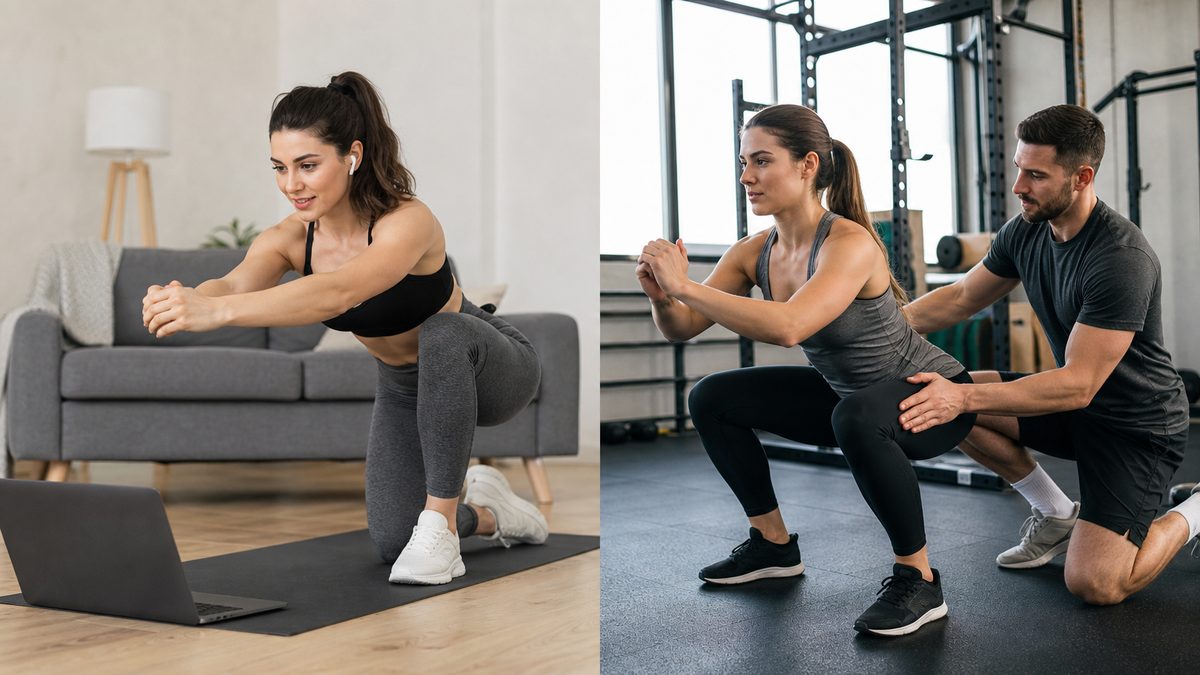
Choose in-person training if you need live technique fixes, close supervision, or firm appointment-based Accountability. Choose online training if you can Exercise safely and want more control over your schedule and Budget. The right choice depends on the main problem holding back your progress.
A polished app won't fix poor movement. A weekly Gym session won't fix a plan you can't follow between visits.
Your choice should match the support you need right now. A beginner learning complex lifts may need a coach standing beside them. An experienced lifter with changing work hours may fare better with an online plan and regular video reviews. Neither format is best for everyone.
What problem do you need a trainer to solve?
Start with your biggest barrier. Some people don't know which exercises to do. Others know what to do but struggle with Motivation, pain, confidence, or consistency. Each problem needs a different kind of help.
In-person coaching works well when the problem happens during your workout. A Personal trainer can watch each repetition, change the weight, fix your position, and explain a cue in another way. You get an answer before your next set.
Online coaching works well when the problem stretches across the week. Your coach can plan sessions around shifts, review finished workouts, track habits, and make changes without being in the same room. Good online coaching covers the hours between workouts, when sleep, food, steps, and missed sessions often shape the result.
Write down the one issue that has held you back over the past month. If it's movement quality or safety, favour in-person help. If it's planning or staying on track during a busy week, online support may be a better fit.
How much live supervision do you need?
Live supervision matters most when a mistake could cause pain, or when you can't feel the difference between a safe position and a poor one. New lifters often think a movement is fine because the weight still moves. A nearby coach can quickly spot a shifting knee, rounded back, rushed tempo, or shallow range.
This also helps when you're returning after an injury, training with a health condition, or learning technical movements. The coach can lower the weight or pick an easier version when your form slips. That quick response is hard to match with recorded video.
Online coaching can still offer helpful form feedback. You record a set from the requested angle and send it to your coach. They point out the error and give you a cue for your next session.
This works when the movement is low risk and you can wait for feedback. It works badly if you keep training through sharp pain or can't set up the camera clearly.
Try a simple test. Can you perform your main movements with steady control and notice when your form breaks down? If not, start in person. You can switch online as your skill and confidence grow.
Which format fits your real week?
A training plan only works if it fits the time you actually have. In-person sessions involve travel, parking, changing, and a fixed appointment. A one-hour workout may take nearly two hours from the moment you leave until you get home. That time cost matters, even when the coaching is great.
Online training cuts out most travel and lets you work out earlier, later, or in shorter blocks. You might use a full Gym, a small home setup, or bodyweight moves while travelling. That freedom can help parents, shift workers, frequent travellers, and people who live far from a good coach.
But flexibility can become a trap. A workout that can happen anytime is easy to put off. If you often move appointments you've set yourself, book online sessions firmly into your calendar. Your coach should also spot missed sessions and contact you before one missed workout turns into a lost week.
Look back at the last four weeks of your calendar. Don't build your plan around a perfect week. Mark the times when you could have trained without rushing or dropping another duty. Pick the format that fits those real gaps.
Where does your Accountability come from?
Some people train because they know someone is waiting. Paying for a set appointment gives them a clear reason to show up. The trainer also sets the pace, making it harder to skip sets or leave early. In-person training offers strong outside Accountability.
Other people can start alone but drift off course over time. They need someone to review their results, ask why they missed a session, and adjust the plan. Online coaching can do this through set check-ins, workout logs, messages, and progress reviews.
The weak form of online coaching is a generic program sent once a month. That's remote programming, not active coaching. Before you join, ask what happens if you miss a workout. A good answer will explain how the coach tracks attendance and when they contact you.
Check the coach's response time too. Daily access sounds useful, but not if replies take several days. Clear Communication rules help both sides. You should know where to ask questions, when to expect a reply, and how often your progress is reviewed.
How much Personalization will you actually receive?
Personalization means your plan changes based on your body, schedule, equipment, goals, and results. It doesn't mean putting your name above a standard workout.
In-person coaching allows changes during every session. If you arrive tired or a movement hurts, your trainer can swap the exercise right away. They can also see details that don't appear in a workout log, such as fear under load or fading control near the end of a set.
Online coaching gives the coach a broader view of your week. A detailed log may show that your performance drops after night shifts, one session takes too long, or your home equipment is holding you back. The coach can then adjust the whole plan instead of reacting to a single workout.
Ask any coach how they create your first program and what would make them change it. Good answers cover your training history, current ability, available equipment, recovery, and recorded results. Weak answers focus on the app or promise a plan before the coach has assessed you. A qualified coach will assess you properly before writing your first program.
Does the coach's Experience match your needs?
How coaching is delivered matters less than the coach's skill. A great online coach may help more than an in-person trainer who ignores your goals. A skilled in-person coach may be safer than an online service built around automatic messages.
Check whether the coach has Experience with people like you. A trainer who mostly works with athletes may not suit a nervous beginner. A coach who focuses on home workouts may struggle with advanced barbell training. Relevant work counts more than a huge social media following.
Ask how the coach deals with pain, stalled progress, missed sessions, and exercises you can't do. Their answers should lay out a clear process. Be wary if every problem leads to harder training, or if they say their method works for everyone.
Qualifications matter too, but they don't guarantee good coaching. Look for simple explanations, professional boundaries, careful assessment, and a willingness to send you to a health professional when a problem falls outside their role.
What does each option demand from you?
In-person training requires punctuality and a willingness to follow live guidance. You must get to the training site at the agreed time. You'll also need to practise what you learn outside coached sessions if you want quicker progress.
Online training calls for more self-management. You must read the session notes, set up your equipment, record clear videos, log results, and speak up when something feels wrong. Your coach can't fix a problem they can't see.
Be honest about how you follow instructions. If written plans leave you confused, live demonstrations may save time. If you enjoy tracking numbers and can work out alone, online coaching may offer enough structure without a fixed meeting place.
Your Physical fitness level doesn't decide the format on its own. A fit person learning a new skill may still need close supervision. A beginner using simple machines may do well online after a proper assessment.
How should Budget affect the choice?
Online coaching often costs less each week because the coach doesn't reserve floor space for every workout. It may also cover a full program, check-ins, video reviews, and message support. In-person fees usually pay for direct time with the trainer and may come on top of Gym membership costs.
Compare the support you get, not the cost of one session against one monthly fee. Work out the full monthly cost, including membership, travel, equipment, app fees, and cancellation rules. Then check how often the coach reviews your work.
A cheap service is poor value if you get a template that never changes. A costly service is poor value if much of the session is spent watching you warm up alone. Pay for the kind of coaching that fixes your main barrier.
If money is tight, a mixed approach can work. Book a few in-person sessions to learn good technique, then move online for programming and reviews. You can return for an in-person check when your plan changes or you start a harder movement.
Would a hybrid setup give you a better result?
Hybrid coaching mixes face-to-face sessions with remote support. It suits people who need the odd form check but don't need a trainer beside them for every workout.
For example, a beginner may meet a coach in person for an assessment and to learn the main movements. The coach then sends online sessions for the rest of the week and reviews videos. Another face-to-face meeting can check that technique stays safe as the weights rise.
This setup also fixes a common gap in standard personal training. One coached hour can't control the rest of the week. Remote tracking keeps your plan visible between appointments, while live sessions protect movement quality.
Hybrid coaching only works when both parts are joined. The in-person trainer and online coach should be the same person or follow one shared plan. Two separate programs may cause too much training and mixed advice.
What warning signs should you check before paying?
A good service clearly explains its support. You should know who writes your plan, how often it changes, how progress is tracked, and what help you'll get if an exercise causes pain.
- Avoid online plans that promise full Personalization without an assessment or training history.
- Avoid trainers who can't explain their Communication schedule or usual reply time.
- Avoid contracts that hide cancellation terms, extra app charges, or unused-session rules.
- Avoid coaches who tell you to push through sharp pain or work beyond their professional role.
- Avoid services that chase fast body changes while ignoring safe progress and recovery.
Ask to see how workouts are delivered before signing up. A sample can show whether the instructions are clear and the exercise videos suit the equipment you own. For in-person coaching, request a short consultation to see how closely the trainer listens.
How can you make the final choice?
Score each option against your needs instead of picking the format that looks more popular. Use a scale from one to five for supervision, scheduling, Accountability, Personalization, Communication, and total cost. Give more weight to your biggest barrier.
- Name the single problem you want coaching to solve.
- Choose the level of live supervision needed for safe Exercise.
- Check which format fits your real calendar for the next eight weeks.
- Compare the full Budget and the support that's included.
- Speak with the coach and ask how they change the plan when progress stalls.
- Choose a short starting term so you can test the service through real use.
Review your choice after four weeks. Ask whether you finished more planned sessions, trained with better form, and knew what to do next. If those things haven't improved, change the coaching setup instead of blaming your Motivation.
Take one action today: write down your biggest training barrier, then choose the coaching format built to remove it.